By Steve Laser
Honda has shown an amazing array of concept vehicles over the years at major auto shows in Japan. From sports cars, to mini-vehicles, to minivans, there’s always something new to see. The Honda WIC (What Is a Car?), and SUU (Smart, Urban, Useful) are two concepts that Honda presented with a Space Magic theme.
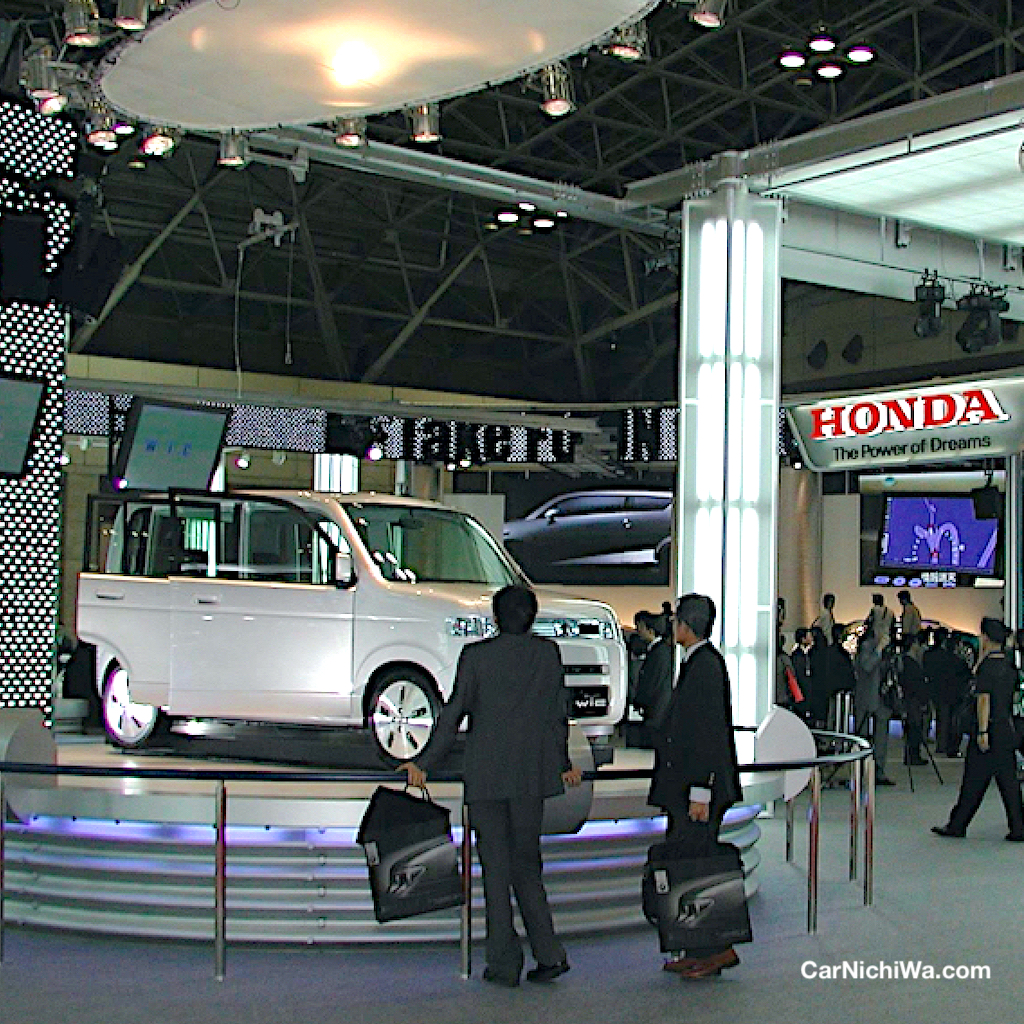 This story takes a quick look back at our visit to the 35th Tokyo Motor Show, where we attended the press days, Oct. 24-25, 2001, at Makuhari Messe in Chiba. Shown above is a small part of the Honda exhibit, with the WIC concept on display.
WIC – “What Is a Car?”
The WIC concept, that stands for “What Is a Car?” was a multi-purpose, wagon-style, mini-vehicle (Kei car) said to take simplicity to the max. It featured a minimalist exterior with a round-square design, like a box with rounded corners.
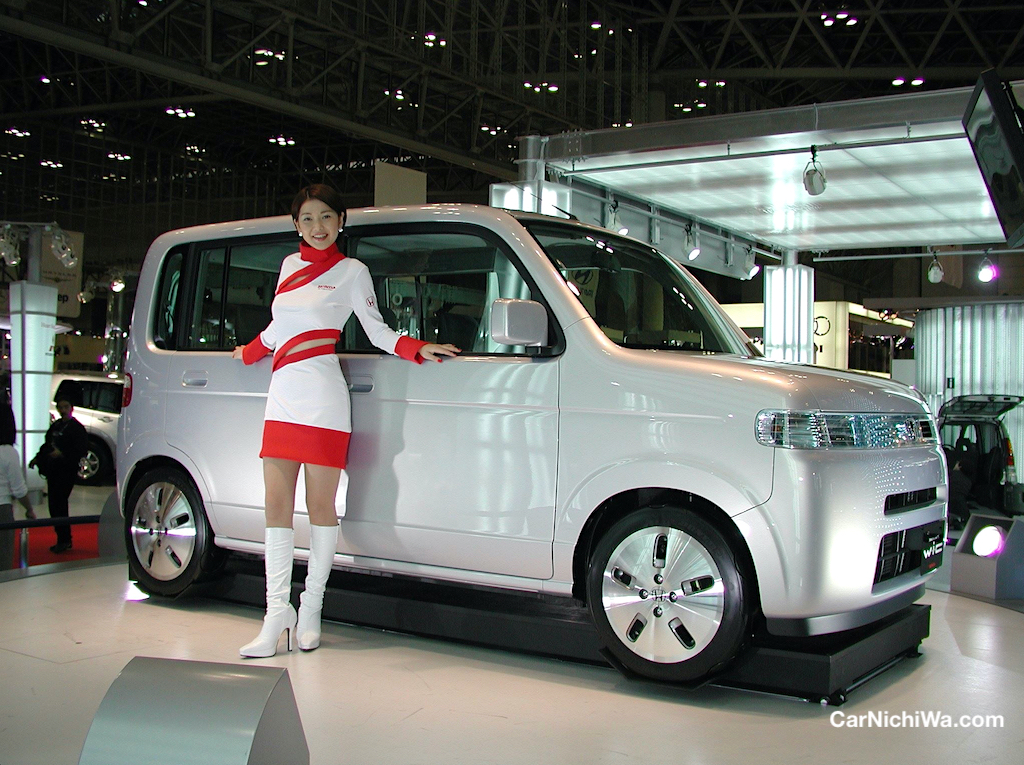 WIC previewed a model that Honda introduced the following year called That’s (short for “That’s the one”), with a nearly identical exterior design. Powertrain choices included 660cc naturally aspirated and turbocharged engines, with front- or all-wheel drive.
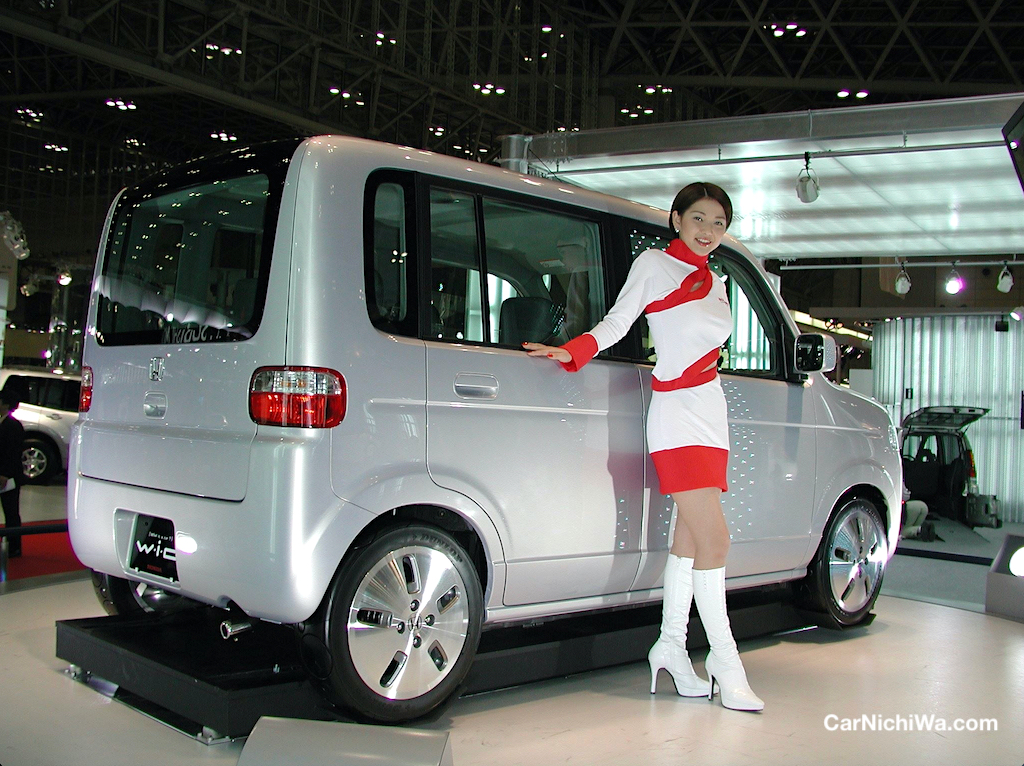 Inside, WIC offered a four-passenger interior with a simple, functional style. Displays and controls were said to be combined in a compact instrument panel with an easy to use layout. The column-mounted shifter for the automatic transmission saved space, while an infotainment system was centrally mounted on the dash.
This video, from the CarNichiWa.com YouTube channel, features photos of the Honda WIC and SUU concepts that we made during press days at the 35th Tokyo Motor Show.
SUU – Smart, Urban, Useful
The SUU concept, that stands for Smart, Urban, Useful, previewed an upcoming production vehicle, called Mobilio. Honda’s showroom lineup of boxy vehicles 25 years ago included the S-MX (small MPV), Odyssey (minivan), and STEP WGN (larger minivan).
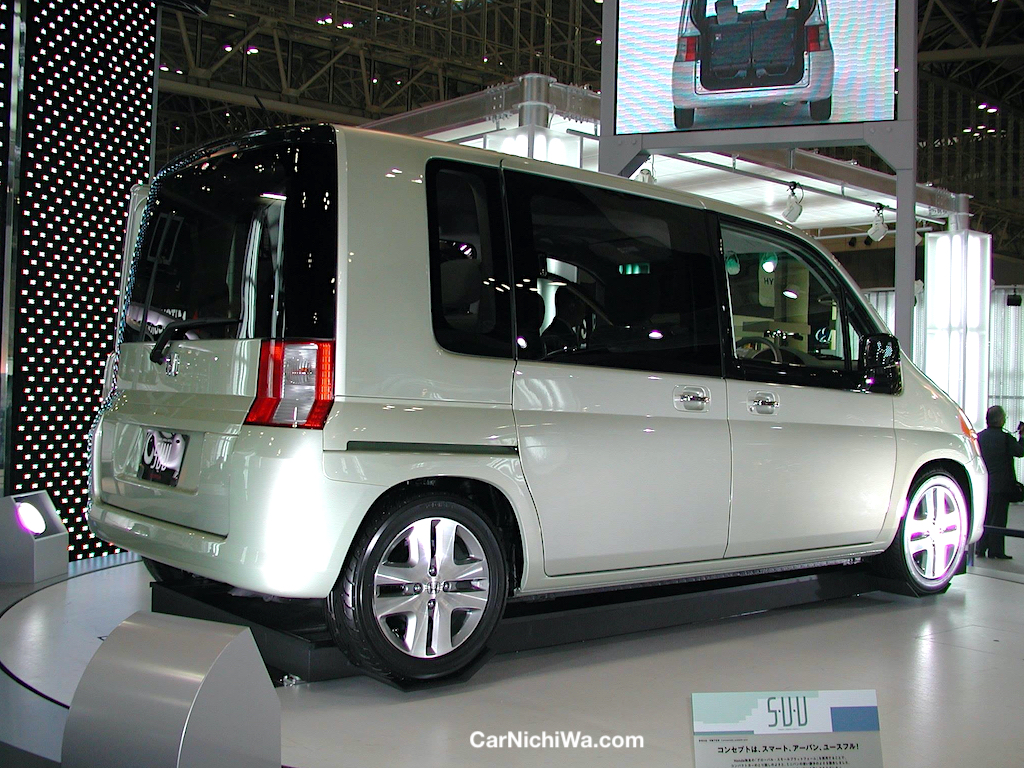 SUU featured smart packaging with a compact body, urban styling that blended refinement and functionality, and utility for 7-passenger passenger comfort. It rode on Honda’s Global Small Platform, and featured a 2,740 mm wheelbase, 4,055 mm overall length, 1,685 mm width, and 1,705 mm height.
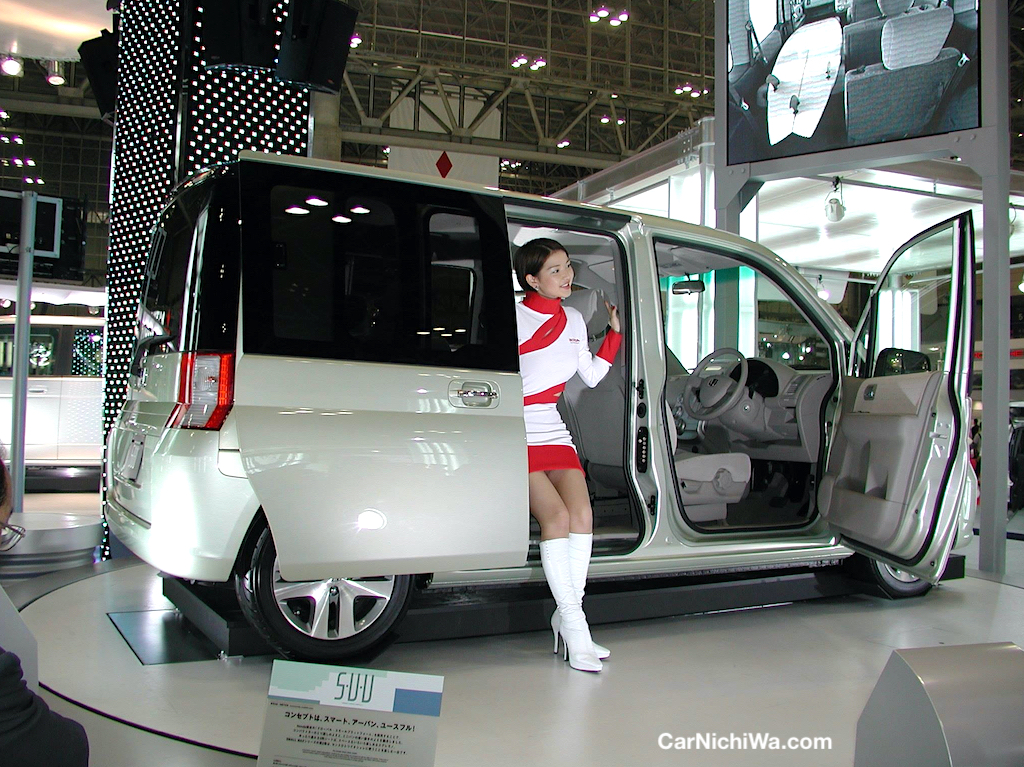 Front doors employed forward-angled hinges for ease of use, while the center doors were the sliding type on both sides for easy entry and exit in narrow parking spaces. A low floor made it easy to get in and out of the cabin, along with providing convenient cargo area access.
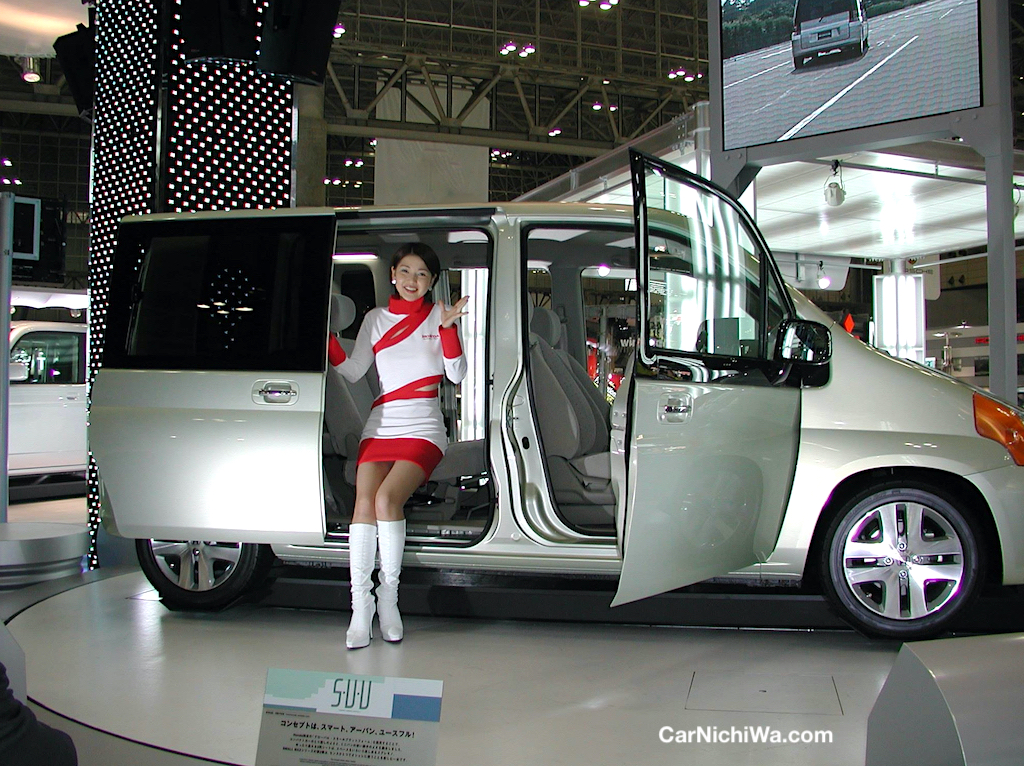 With the large panoramic glass area, the driver and passengers were treated to excellent outward visibility. Creative packaging, with a center-mounted underfloor fuel tank, allowed space for the third-row seats to be stowed under the second row for extra rear cargo space.
The production model Mobilio was powered by a front-drive, 1.5-liter i-DSI gas engine teamed with Honda’s Multimatic S CVT transmission. The shift lever, located on the instrument panel, allowed easy walkthrough access to the second-row seats.
Photos 2001 by Steve Laser on location in Chiba, Japan
Story (commentary) and video 2026 CarNichiWa.com