By Steve Laser
While visiting Japan in Oct., 1995, we saw the new Honda CR-V for the first time at the Tokyo Motor Show press days (below). We liked everything about it, including the styling, the four-door wagon-like design, and the crossover SUV unibody platform.
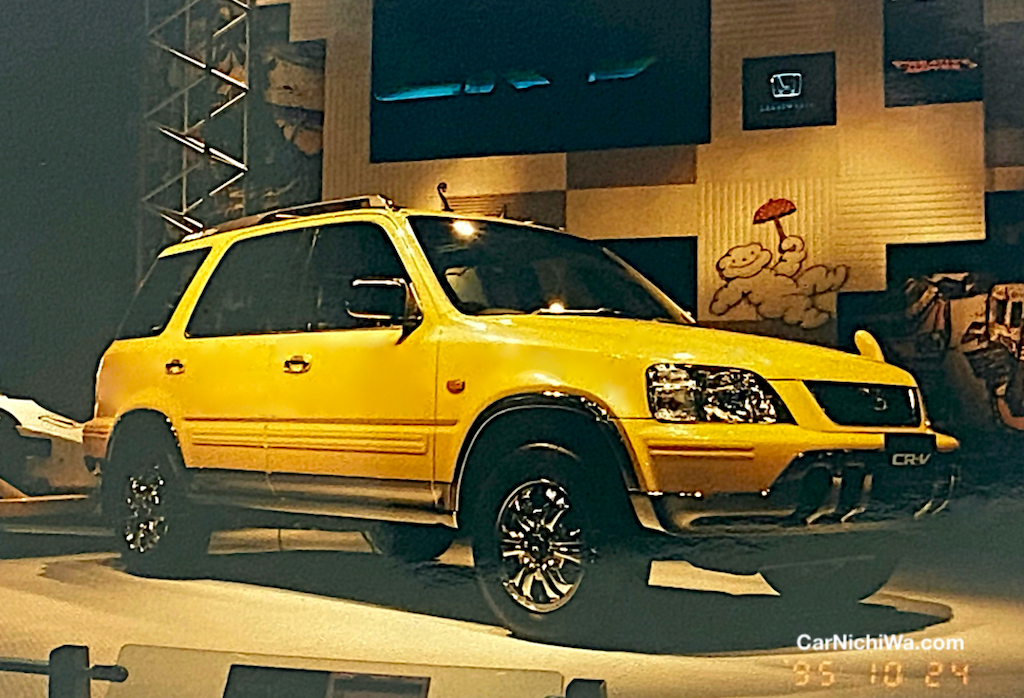 The CR-V has been a tremendous success story for Honda. Since the launch of the first generation in Japan 30 years ago, more than 15 million units have been sold worldwide. Now in its sixth generation, the CR-V offers both gas and e:HEV hybrid models, plus the new e:FCEV fuel-cell vehicle.
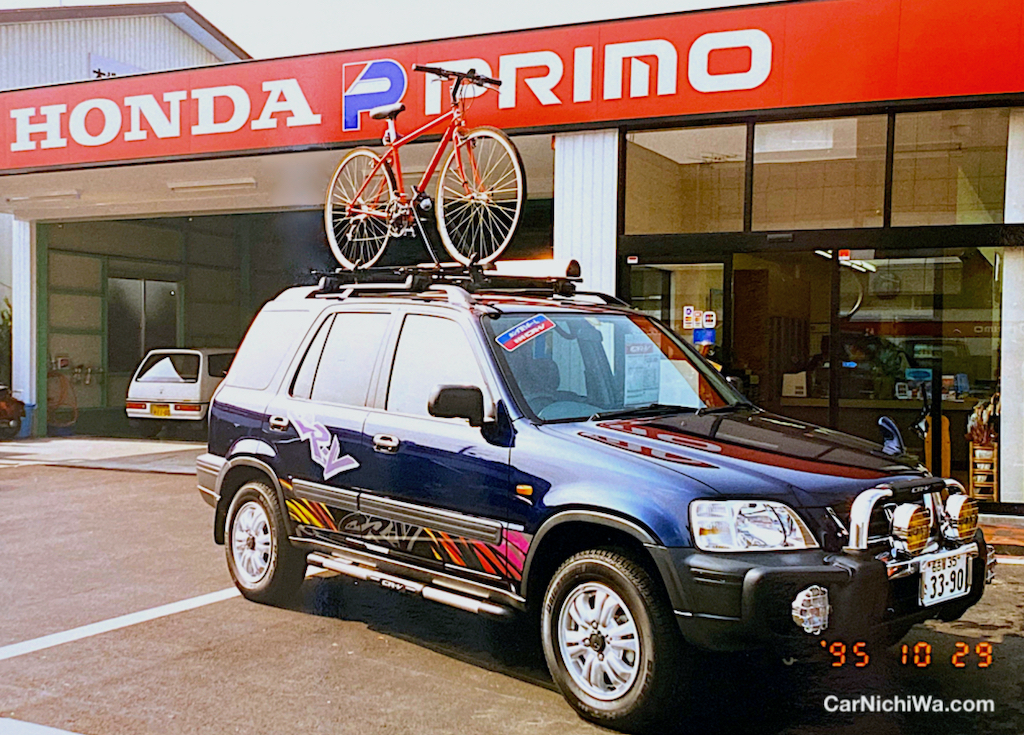 Following the show, we visited a Honda Primo dealer to take a closer look at a new 1995 production model CR-V that was fitted with accessories (above). There was a front brush guard, fog lights, side steps, alloy wheels, cool-looking decals, and a rooftop bike carrier.
 So what does “CR-V” stand for? Well, during the new model launch in Japan, Honda issued a press kit for the media. The image above calls CR-V a “Comfortable Runabout Vehicle”. The Honda Primo dealer had copies of this as a decal.
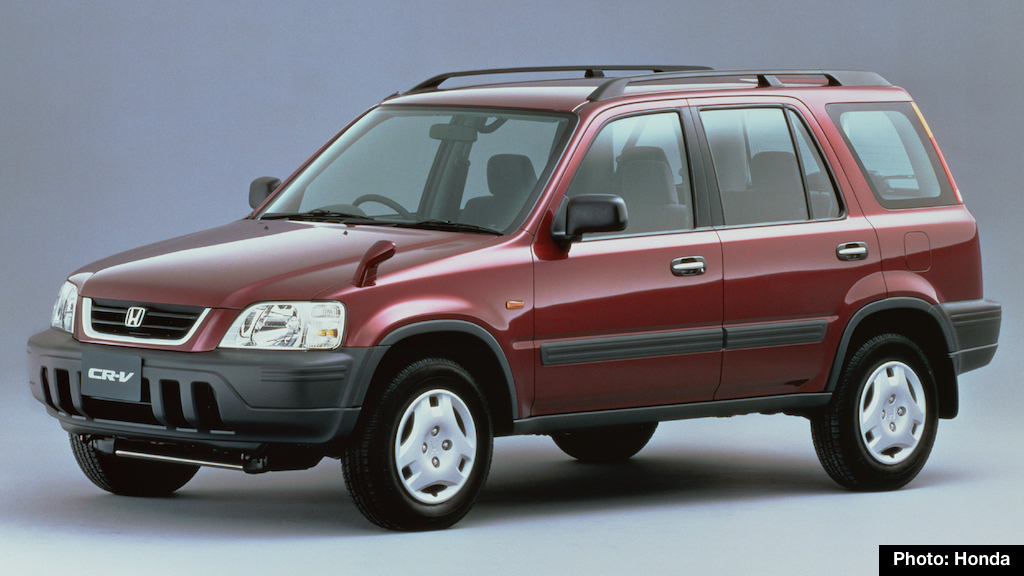 The above photo, and the ones that follow, are courtesy of Honda’s 1995 Japan-market CR-V press kit. The car-based crossover made its debut in an era when most SUVs were based on truck platforms. By the time the CR-V reached the U.S. two years later, it was already a sales success.
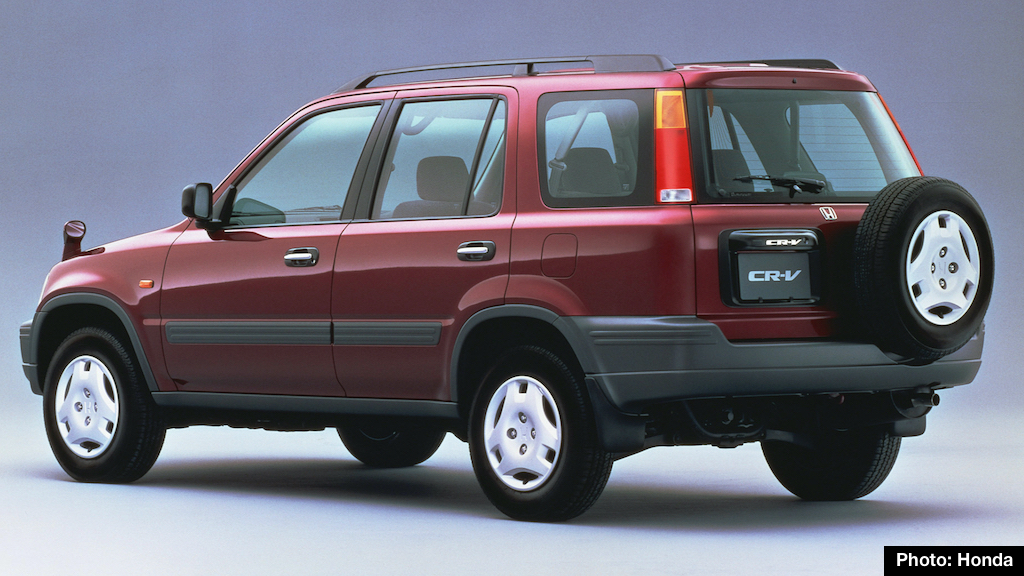 Honda gave the CR-V rugged design cues, including a tailgate-mounted spare tire. Japan-market models featured a 2.0-liter DOHC 16-valve 4-cylinder engine with PGM-FI, rated at 130 PS and 19.0 kgm torque, teamed with an electronically controlled 4-speed automatic transmission, and Real-time 4WD. Four-wheel double-wishbone suspension contributed to a smooth ride.
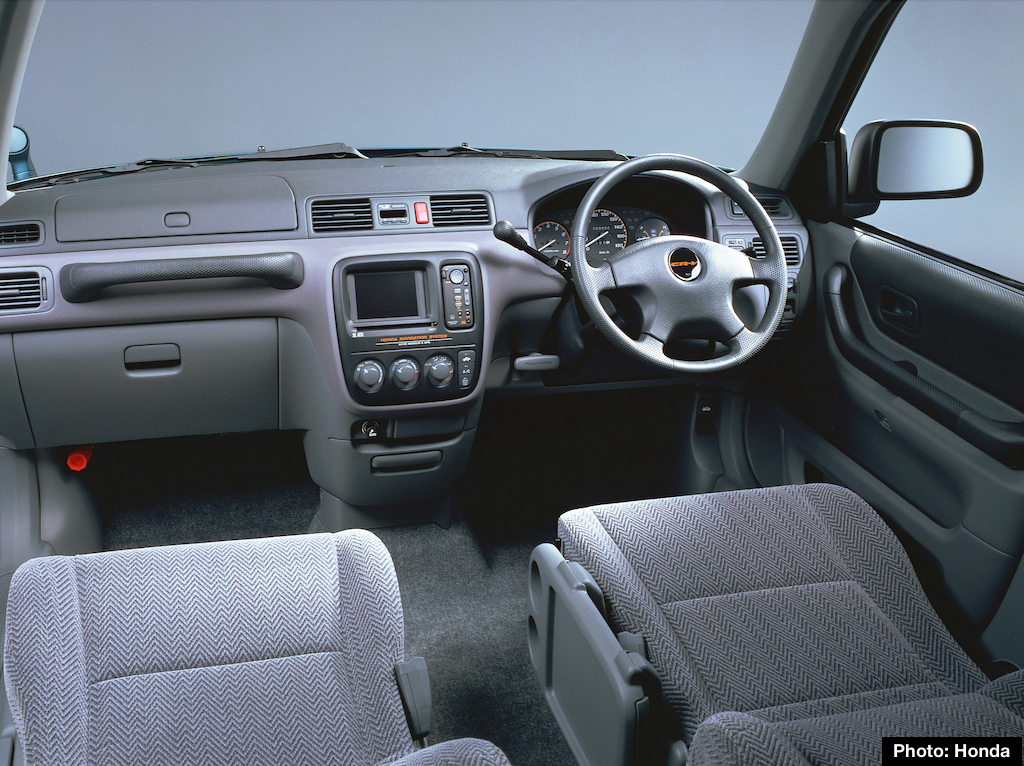 Space-saving features included a column-mounted transmission gearshift and tilt-up tray with cupholders on the driver’s seat. Options for Japan-market models included a new Honda Navigation System (above), along with an entertainment system featuring a CD player and audio system with remote control.
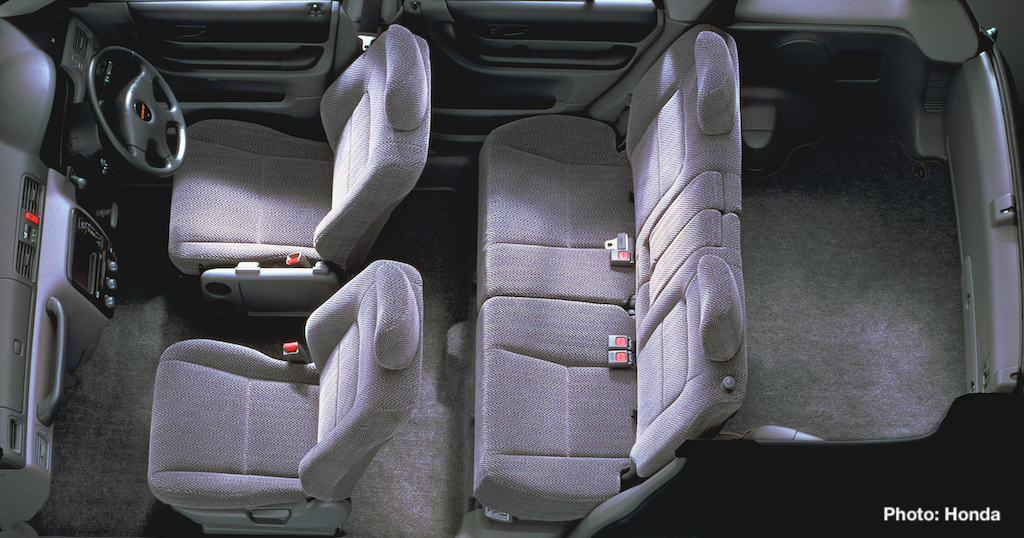 Five-passenger seating included a “walk-through” space between the front and rear seats. Cargo carrying flexibility was enhanced with fold-down rear seatbacks and tilt-up cushions to create a flat load floor.
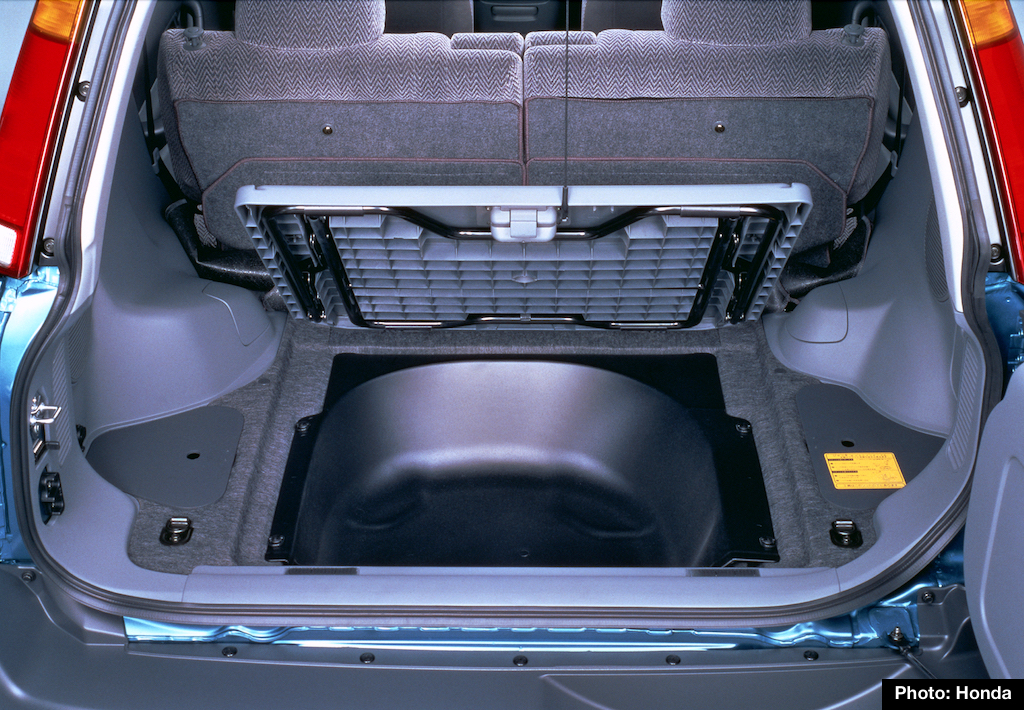 The split tailgate combined tilt-up rear glass with a swing-out lower section. Innovative cargo area features included a waterproof lower tray for stowing wet items, and a lift-out hard cargo cover with fold-down legs that could serve as a picnic table for family outings.
News source and photos (as marked) courtesy of Honda Motor Co., Ltd.
Additional photos (as marked) © 1995 by Steve Laser on location in Japan
Story (commentary) © 2026 CarNichiWa.com